
ADUs and rules
What Is an ADU? A Plain Guide for Washington Homeowners
The short answer
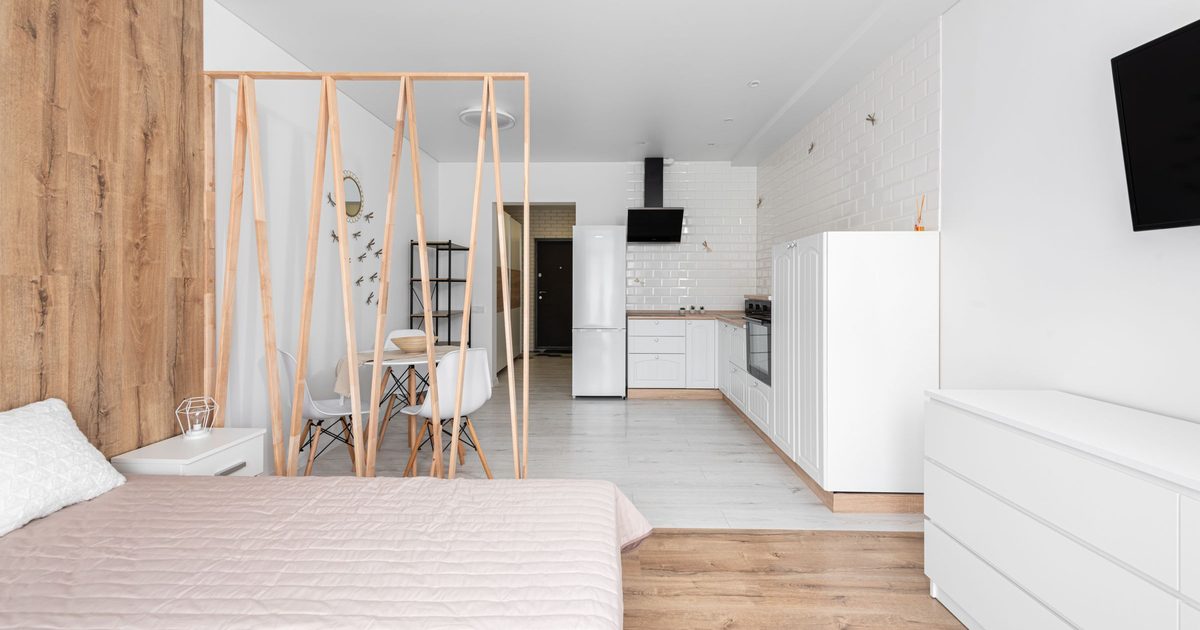
An ADU, or accessory dwelling unit, is a second, smaller home on the same lot as an existing house. It has its own kitchen, its own bathroom and its own place to sleep.
It can sit inside the house, be attached to it, or stand on its own in the backyard. The detached kind is often called a DADU or a backyard cottage.
In Washington, cities and counties planning under the Growth Management Act must now allow two ADUs per lot inside urban growth areas.
What ADU stands for, and its other names
ADU stands for accessory dwelling unit. Accessory, because it sits on a lot that already has a main home. Dwelling unit, because it is a complete home in its own right.
Washington law defines it plainly, as a dwelling unit located on the same lot as a single-family house, duplex, triplex, townhome or other housing unit.
You will hear the same thing called by other names.
- Backyard cottage or DADU, for a detached unit.
- Mother-in-law apartment or in-law suite, usually inside or attached to the house.
- Granny flat, an older and more casual name for either.
- Carriage house, a unit built over a garage.
The name matters less than whether it is a complete home. The building code defines a dwelling unit as having permanent provisions for living, sleeping, eating, cooking and sanitation. A finished room over the garage with a bathroom but no kitchen is extra space, not an ADU.
The kinds of ADU
Washington law names two kinds, attached and detached. In practice there are three ways to end up with one.
- Attached ADU. Inside or joined to the main house, such as a basement apartment, an attic conversion or a unit built onto the side.
- Detached ADU. A separate building on the same property, the backyard cottage most people picture.
- Conversion. An existing structure turned into a home, most often a detached garage. Inside urban growth areas, cities and counties must allow this.
Where two are allowed you can mix them. Two attached units, one of each, or two detached units in one or two buildings.
What ADU means in real estate
On a listing, an ADU means the property has a second, separate home on it. That can mean rental income, room for family, or a place to live while you rent out the main house.
Two Washington rules make an ADU worth more than it used to be. Inside urban growth areas, cities and counties cannot require the owner to live on the property, so both homes can be rented. And they cannot refuse the separate sale of an ADU as a condominium unit just because it was built as an ADU.
Two cautions. Cities can still restrict ADUs used as short-term rentals, and some do. Tukwila, for example, does not allow an ADU to be rented for less than 30 days. And if you are buying a house with an ADU, ask whether it was permitted, because a unit built without permits may not count as a legal home.
What Washington law now guarantees
In 2023 the state passed HB 1337, now in RCW 36.70A.680 and 36.70A.681. It sets a floor that local ADU rules inside urban growth areas cannot go below.
| Rule | What state law requires |
|---|---|
| ADUs per lot | At least two, on lots in zones that allow single-family homes |
| Size | Limits must allow at least 1,000 square feet of gross floor area |
| Height | At least 24 feet, unless the main house is limited to less |
| Setbacks | No stricter than for the main house |
| Owner living on site | Cannot be required |
| Parking | None within half a mile of a major transit stop; elsewhere at most one space per unit on lots under 6,000 sq ft, two on larger lots |
| Impact fees | No more than 50 percent of what the main house would pay |
| Garage conversions | Must be allowed |
| Selling separately | Cannot be refused just because the unit was built as an ADU |
Each city and county must adopt these within six months of its next comprehensive plan update, so some deadlines run to the end of 2026. Once a deadline passes, the state rules apply directly, even where the local code has not caught up.
What applies around Olympia
Thurston County adopted its new ADU rules on 16 December 2025, in Ordinance 16575. Inside the urban growth areas of Olympia, Lacey, Tumwater, Grand Mound, Yelm, Rainier and Tenino you can now have two ADUs on one lot.
In the rural county you get one. A detached rural ADU must sit within 100 feet of the main house unless there are limiting circumstances, and it must share the main driveway. It is capped at 1,000 square feet, or 1,200 with a transferable development right.
A 2026 state law, HB 1345, sets conditions for counties that choose to allow detached ADUs outside urban growth areas. It does not change county rules adopted before it, so Thurston County's rural rules stand.
Inside the cities there is a shortcut. Olympia, Lacey and Tumwater, now joined by Yelm, share pre-approved ADU plans designed by The Artisans Group. Lacey lists four sizes, from a 480 square foot studio to an 800 square foot two bedroom, and a 1,000 square foot plan was commissioned in 2025.
The county detail, including septic and which code applies to your lot, is in our guide to Thurston County ADU rules. In Tacoma and the rest of Pierce County the same state floor applies inside urban growth areas, with each city or the county writing its own code on top.
ADU, addition or tiny house?
| ADU | Addition | Tiny house | |
|---|---|---|---|
| What it is | A second, complete home on the lot | More space in your existing home | A dwelling of 400 square feet or less |
| Its own kitchen | Yes | No | Yes |
| Rented separately | Yes | No | Yes, when built on a foundation as an ADU |
| Size inside urban growth areas | At least 1,000 sq ft allowed | Set by your lot and zoning | 400 sq ft or less by definition |
A tiny house on a permanent foundation can be a detached ADU. One on wheels is usually an RV, which we explain in tiny homes on a foundation or on wheels.
If you only need more room for your own household, an addition may be the better fit, and we cover what one costs in home addition cost in Olympia.
Before you plan one
- Check whether your lot is inside an urban growth area. That decides how many ADUs you can have, and in Thurston County whether the city or the county permits it.
- On septic, ask early whether the system can take a second home. It is the most common reason a rural ADU stalls.
- Look at what is already on the lot. A detached garage is a candidate, and conversions must be allowed inside urban growth areas.
- Decide what it is for. Family, rental income or a home office lead to different layouts, and short-term rental rules vary by city.
Where to go from here
We design and build ADUs and DADUs across Thurston and Pierce counties, from conversions to new backyard cottages on foundations.
Tell us your address and we will tell you which rules apply to your lot and what kind of ADU fits it.
Common questions
What does ADU stand for?
Accessory dwelling unit. It is a second, smaller home on the same lot as an existing house, with its own kitchen, bathroom and place to sleep.
What is an ADU in real estate?
A second, separate home on the same property. Inside Washington's urban growth areas, cities and counties cannot require the owner to live on site, so both homes can be rented, and they cannot refuse the separate sale of an ADU as a condominium unit just because it was built as an ADU. Ask whether any ADU you are buying was permitted.
What is the difference between an ADU and a DADU?
A DADU is a detached accessory dwelling unit, a separate building on the lot. ADU covers both that and attached units inside or joined to the main house.
How many ADUs can I build in Washington?
Inside urban growth areas, state law requires cities and counties to allow at least two per lot in zones that allow single-family homes. Outside them, county rules apply. In rural Thurston County you can have one.
How big can an ADU be in Washington?
Inside urban growth areas, local limits must allow at least 1,000 square feet of gross floor area and a roof height of at least 24 feet, unless the main house is limited to less. In rural Thurston County a detached ADU is capped at 1,000 square feet, or 1,200 with a transferable development right.
Can I rent out my ADU?
Generally yes. Inside urban growth areas, cities and counties cannot require the owner to live on site. They can restrict short-term rentals, and some do, so check with your city before listing one as a vacation rental.
Can I turn my garage into an ADU?
Inside urban growth areas, cities and counties must allow an existing structure such as a detached garage to be converted. It still has to meet the building code as a home.
Is a tiny house an ADU?
It can be. A tiny house on a permanent foundation can be a detached ADU. A tiny house on wheels is usually a park model RV, which is not a dwelling.
Code requirements on this page were last checked on 7 October 2026. Codes change, so confirm current standards with your city or county before you apply.
Planning a deck in Thurston County?
We handle the permit work as part of the build. Tell us the site and what you want.
Where this applies
We work in every one of these towns, and each has its own page covering the rules that apply there.